

We left Sugarloaf Provincial Park and drove to the waterfront of Campbellton to have a look at the Restigouche River in the daylight. Sugarloaf is a ski resort in Winter and has lots of hiking and mountainbiking trails to explore during the warmer months. This is another place that looked like it would have been nice to spend a few days to look around, but we have many more places to get to!
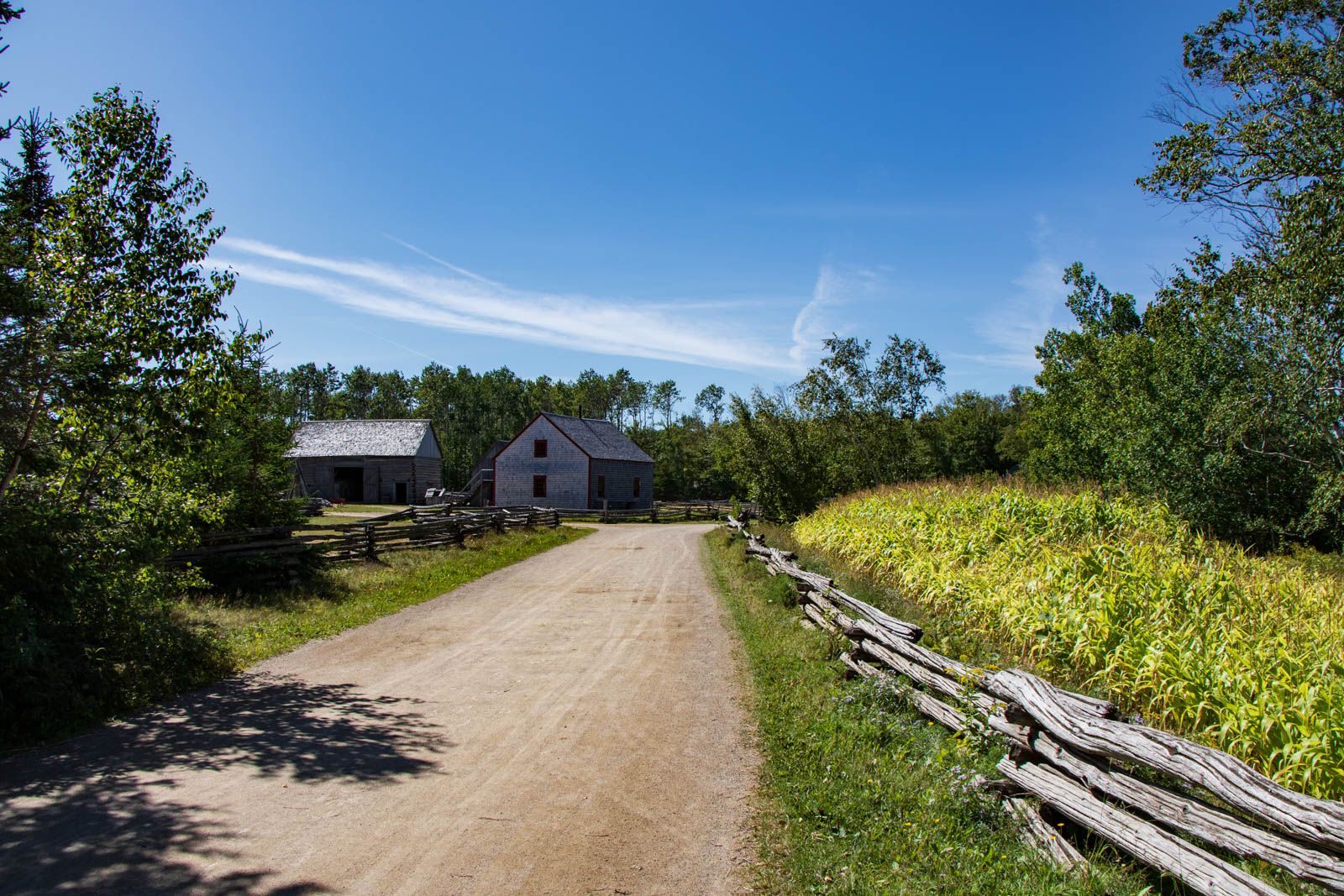
Drove to an Acadian historic village, Village Historique Acadien. We were transported back in time to when early French settlers arrived on the continent. The village was split into three sections, detailing sections of time from 1770 to 1949. We were very impressed at the work that had gone into the restoration, interpretation, and recreation of the buildings and their contents. I was especially pleased that all the buildings and tools were being used, rather than just being props.
Katie thinks that this village was very similar in concept to Howick Historical Village, with the buildings being brought to life by the actor/guide/historians and the landscape that they're set in.
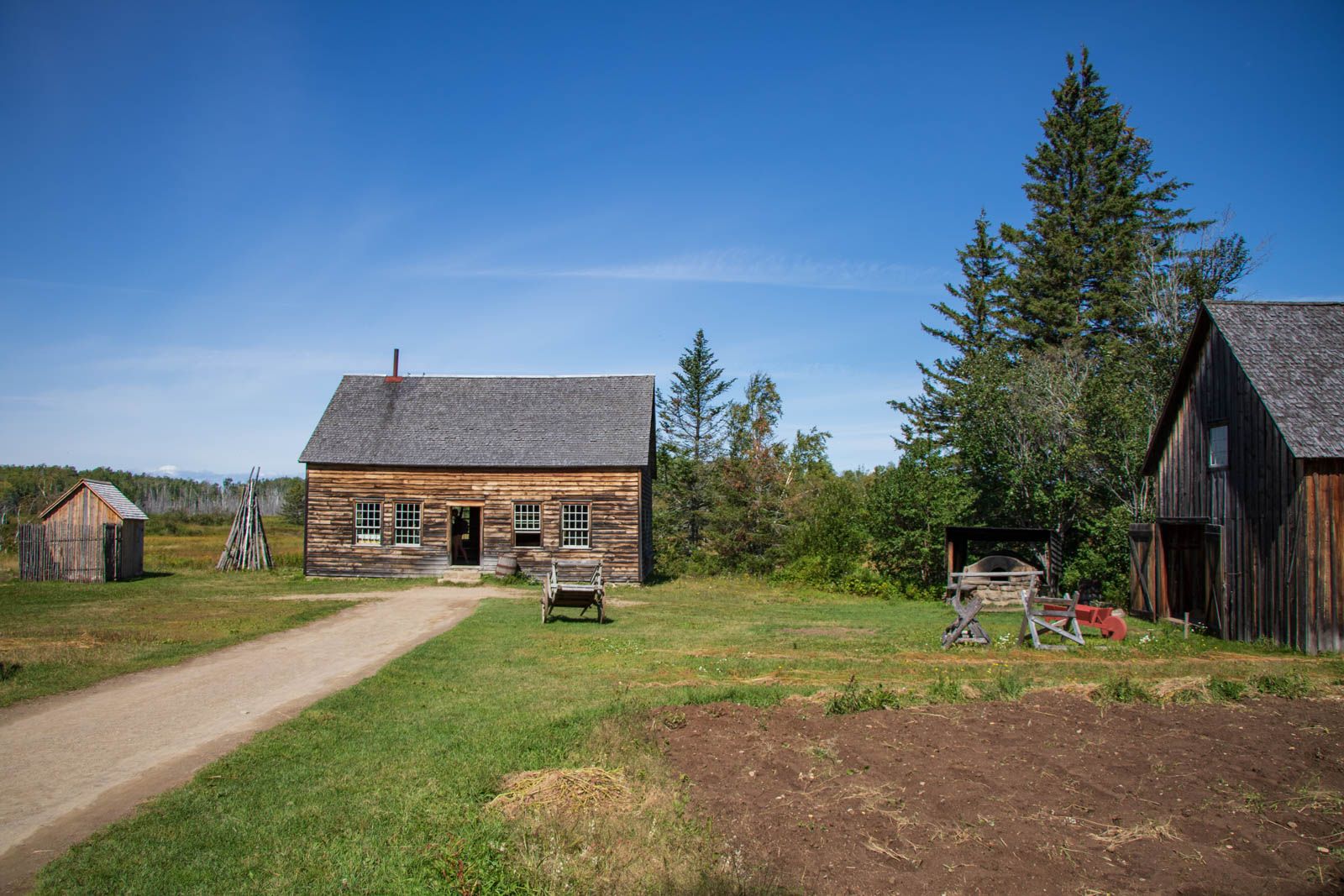
There were many houses occupied by actors playing characters from that period, doing activities that they would have done in the historic figure’s house. In one of the houses we visited they had just finished baking some bread in an outdoor oven, which we sampled! The oven looked like a modern-day pizza oven and took four hours to heat up. The bread tasted just like bread!
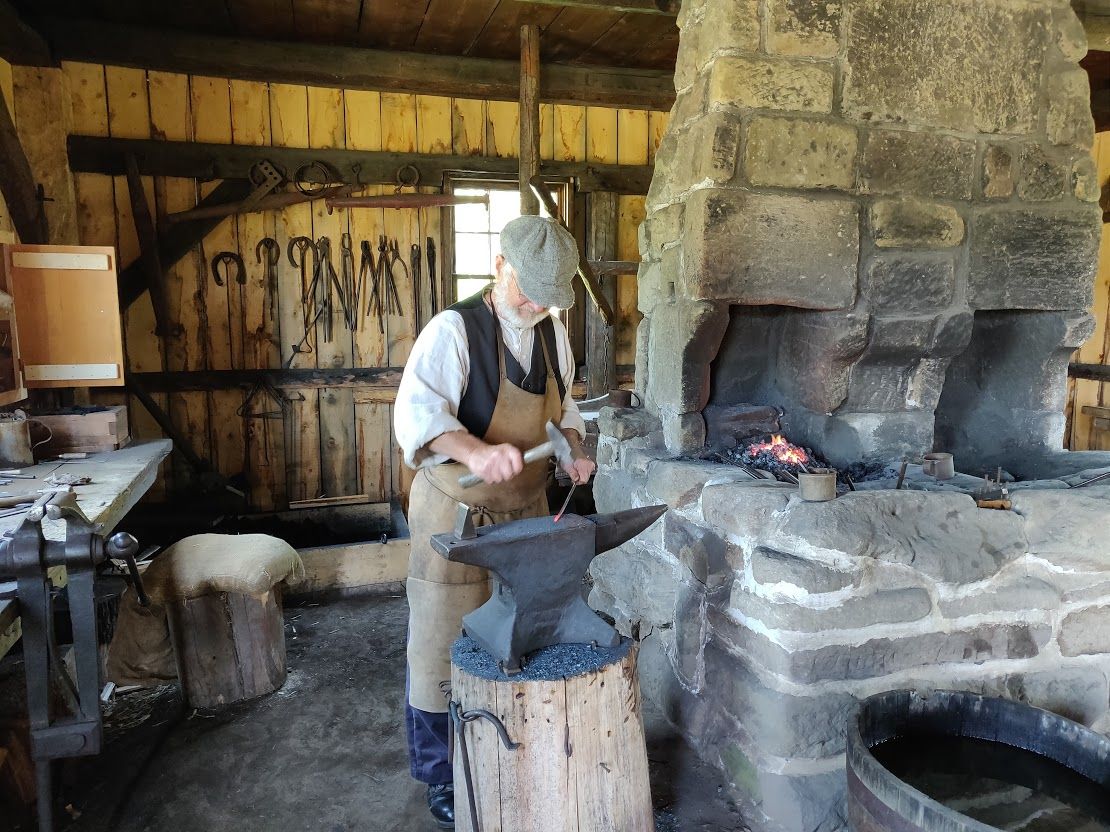
We watched a blacksmith work a piece of iron bar into a nail, which he gave to us to keep! It was both impressive at how fast he created it, but also scary that a single nail would take that long. Imagine how long it would take to make all the nails for a house! The blacksmith told us that all the tools he had would have come with him from England, but once he'd established a workshop he could continue to create new tools and be self-sustaining.
We saw a man making shingles out of cedar using a big curved two-handled knife and a shingle horse. The shingle horse is basically a big clamp that you actuate with your feet, which acts as a third hand to hold onto the shingle you’re working. Each shingle is a slice of board, which is then tapered using the knife. Another tourist who was there watching told us about how he had clad a small shed in his backyard in shingles, and what a huge job that had been for even such a tiny structure.
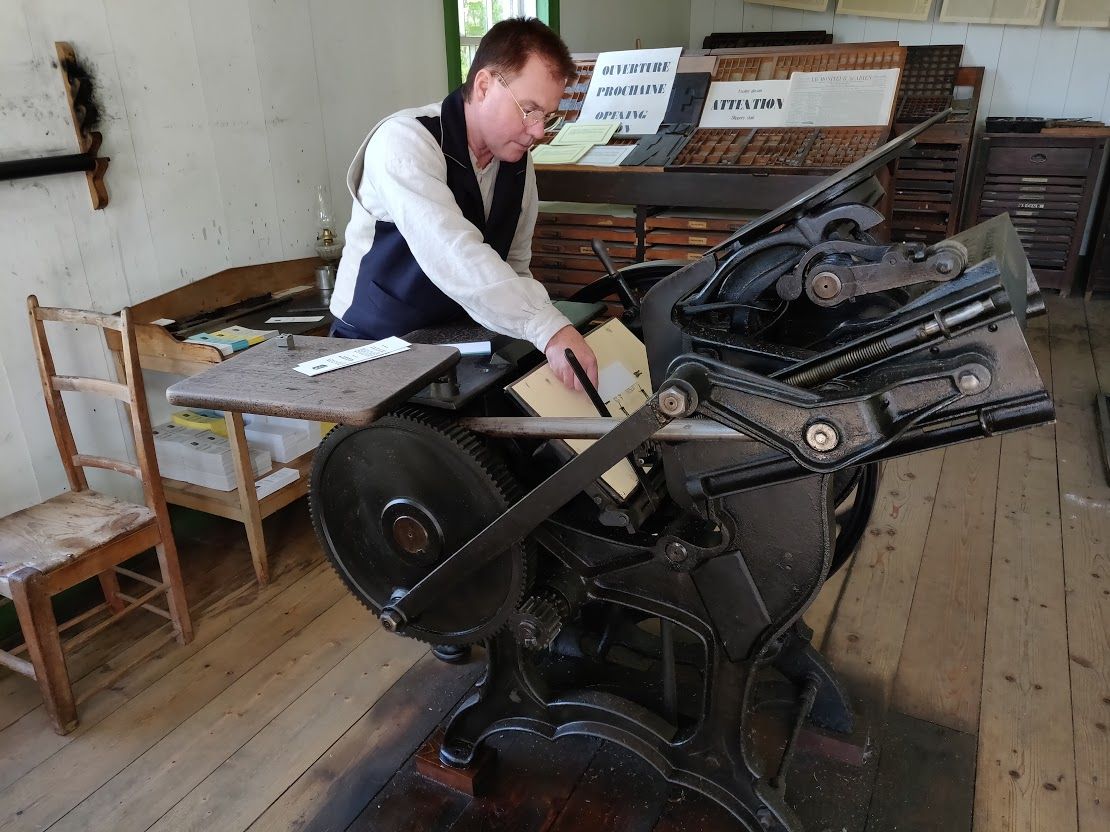
In the printing press building we watched a man printing single-page pamphlets on a continuously operating press, operated by a foot pedal that drove a heavy flywheel. The press would open, and he’d quickly switch out the printed piece of paper for a blank sheet before it closed up again and pressed the new piece. He handed over some newly pressed sheets, and it was quite cool seeing how the press had not only printed ink on the paper but embossed it as well.
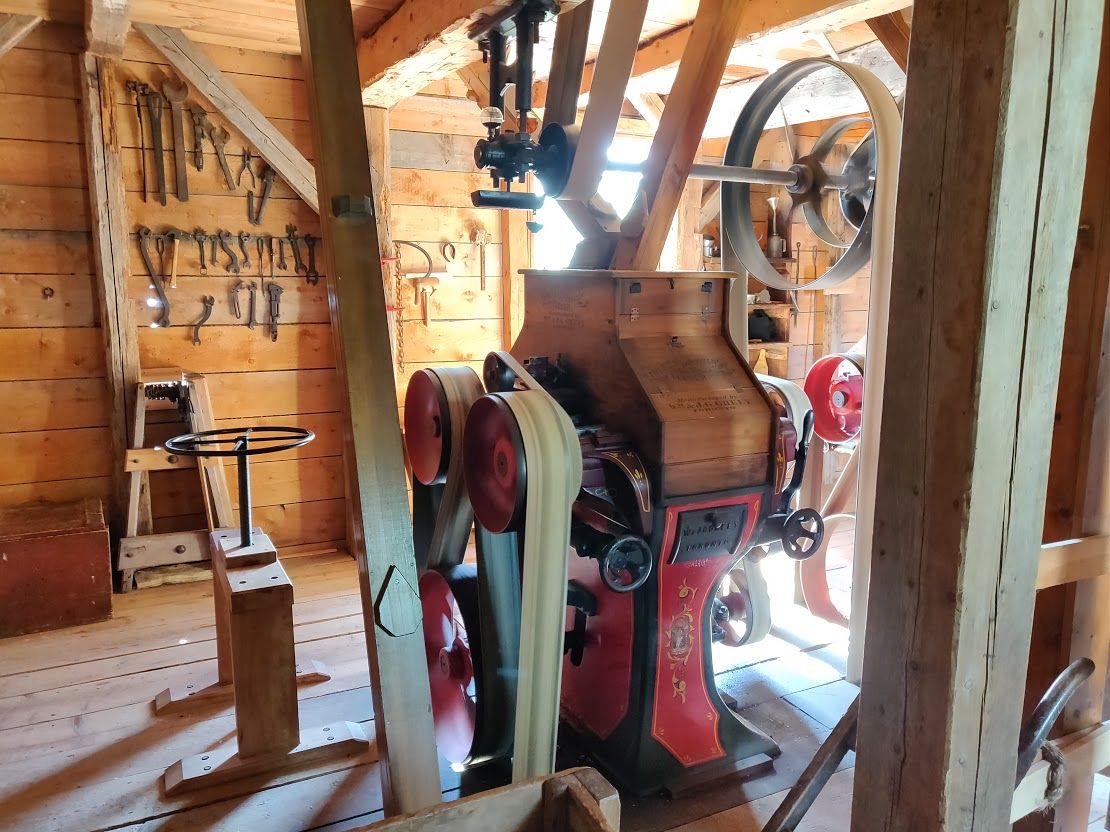
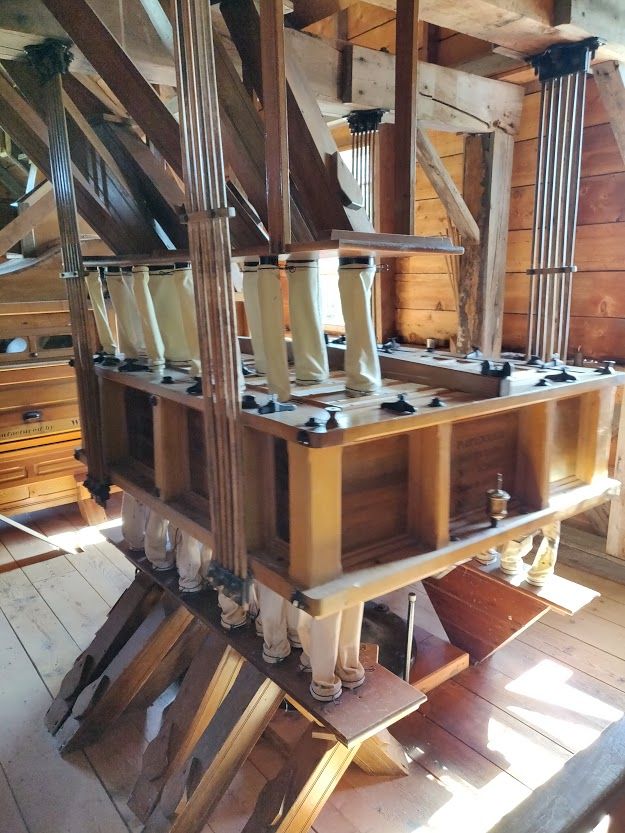
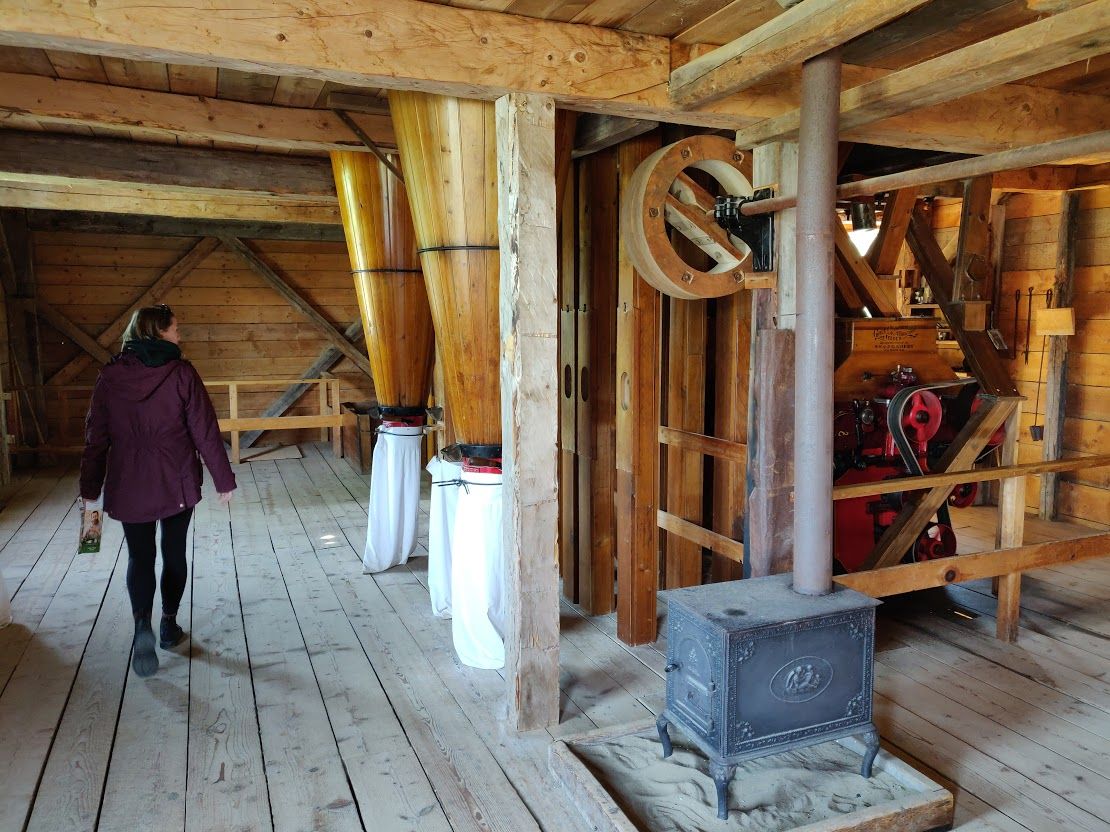
We visited an automated mill, which was driven by a complex set of canvas belts spun by a water wheel. A dam had been built on a small river to let them channel the water through the mill and control the flow of water to regulate the speed of the machinery. The guide in this building was deep in conversation with some French tourists so we couldn’t get a good explanation of what all the machinery was doing, but there was obviously some grinding and sorting going on.
At the cooperage, we were told how the family that used to work there built barrels out of spruce planks. They had a huge rotating saw in the shape of a barrel, with teeth on the end, which was used to cut the planks into curves. The original owners had also purchased an automated shingle making machine, which they had modified to create barrel lids!
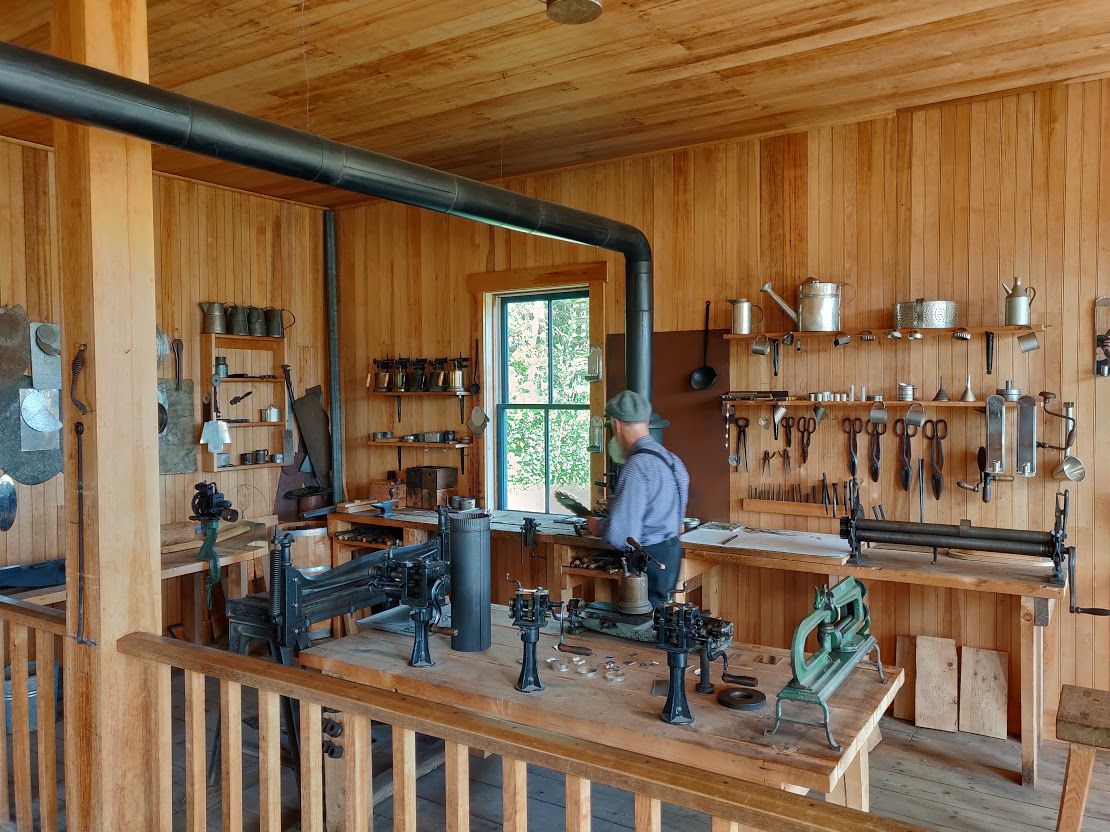
We stopped in at a tin shop, where a guide showed us some homewares that he had been creating out of sheets of tin. He proudly presented a candlestick holder made of cut and pressed metal, soldered together with melted tin. He had lots of intricate small machines mounted to his workbench which all served specific purposes, such as crimping edges. He gave us a little whistle he’d made.
In a wood working workshop a man was making buckets out of slats of wood, all cut with an angle on each edge so that they’d seal perfectly when wrapped around the circular bottom piece and held in place with metal (iron, probably) bands. He had a lathe which was powered by a hand-cranked flywheel, but was otherwise very similar to one you'd find in a modern-day workshop. Equally, many of the tools hanging on his walls like drills and planes haven't changed much over the years, apart from becoming more automated and built from plastic and metal rather than wood.
We saw lots of spinning and weaving of yarn, both by hand and on increasingly complex looms. This fabric would be used to make clothes, beds, and other linen. It’s all functional, it takes so much work to create anything that nothing is really made purely for decoration.
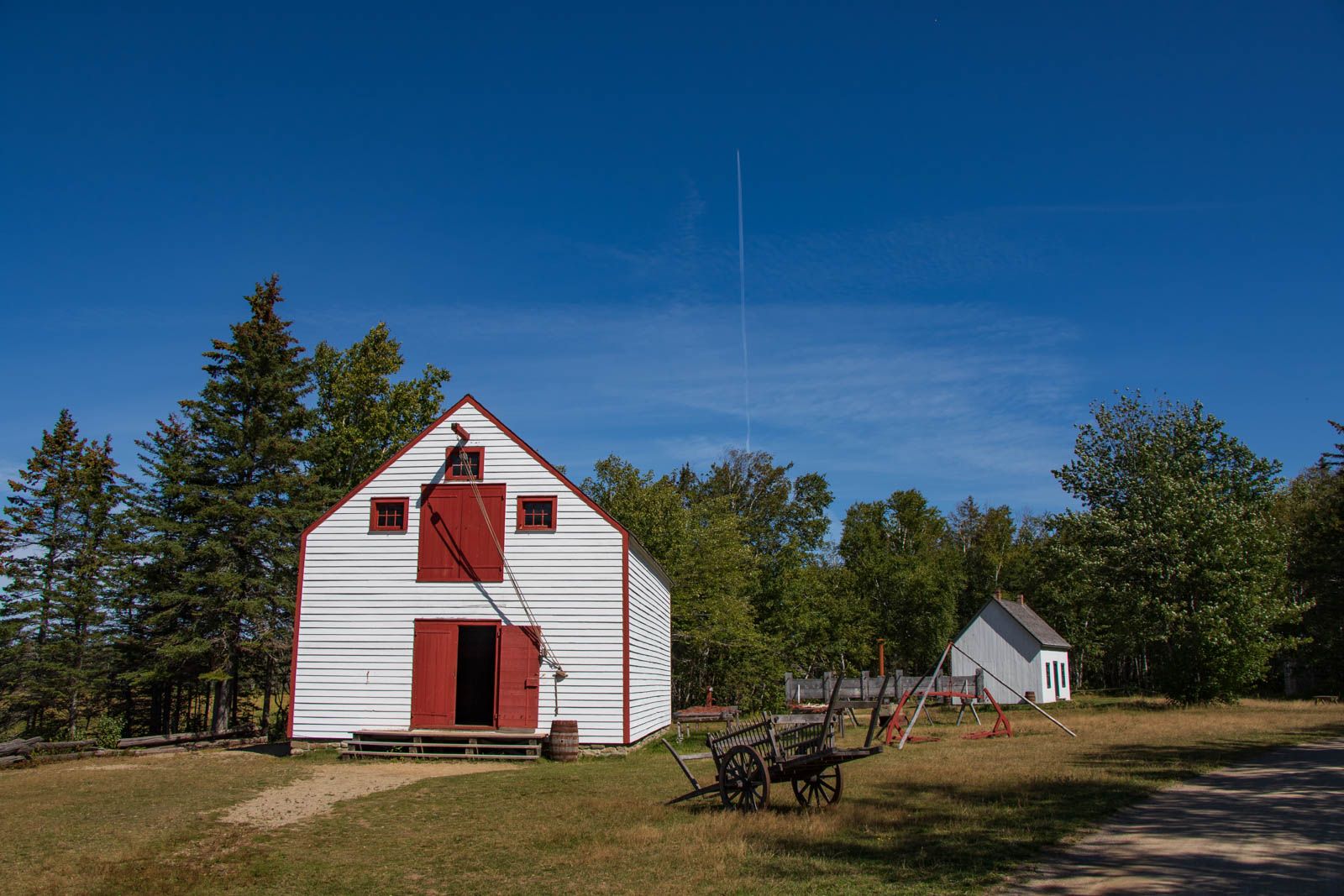
We walked through a fisherman’s barn, which was unoccupied when we were there, but we could see that they had been weaving fishing nets and making ropes. There were barrels would have contained cured fish (herring, I think), which would store for a long time as a backup food source. Outside the barn there were drying racks draped with fish.
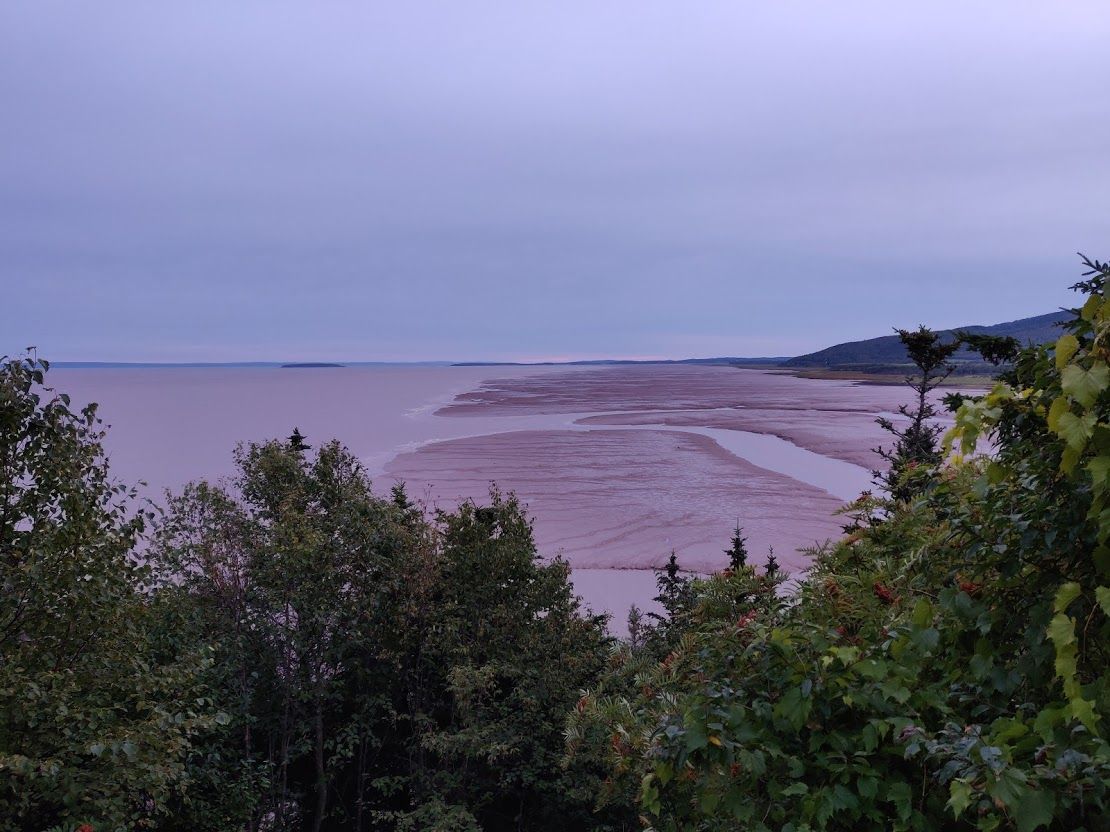
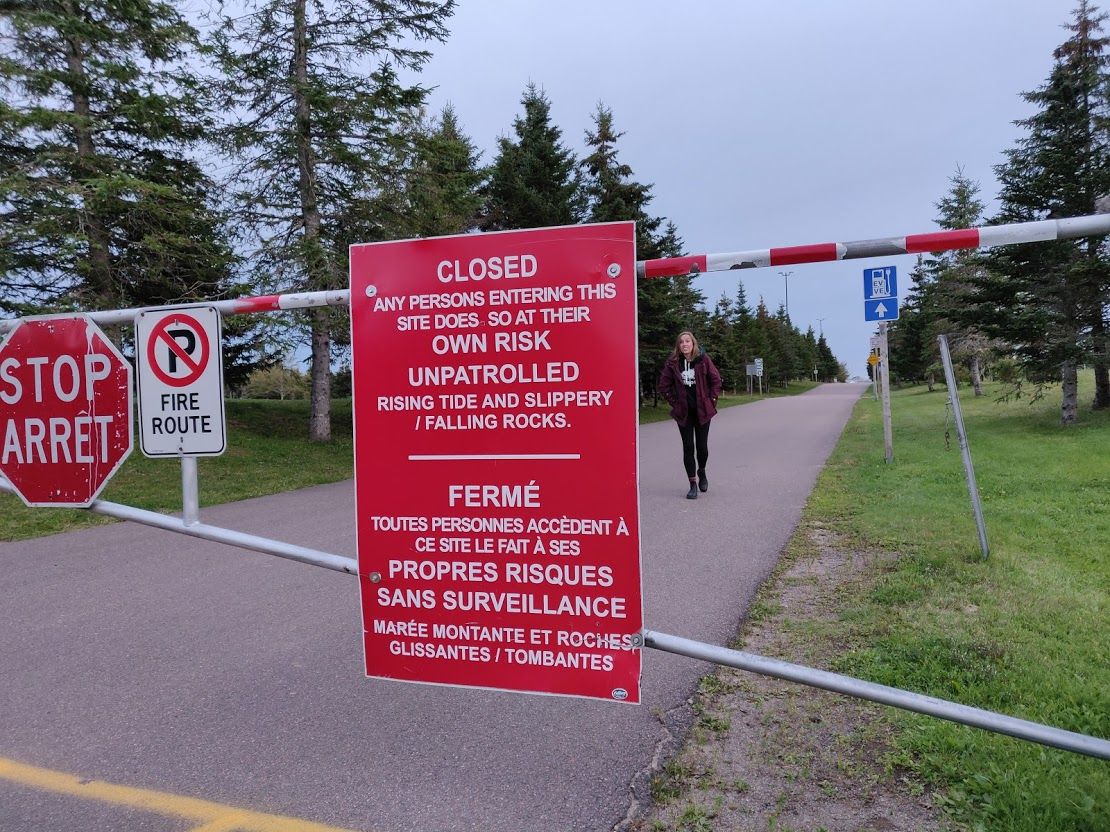
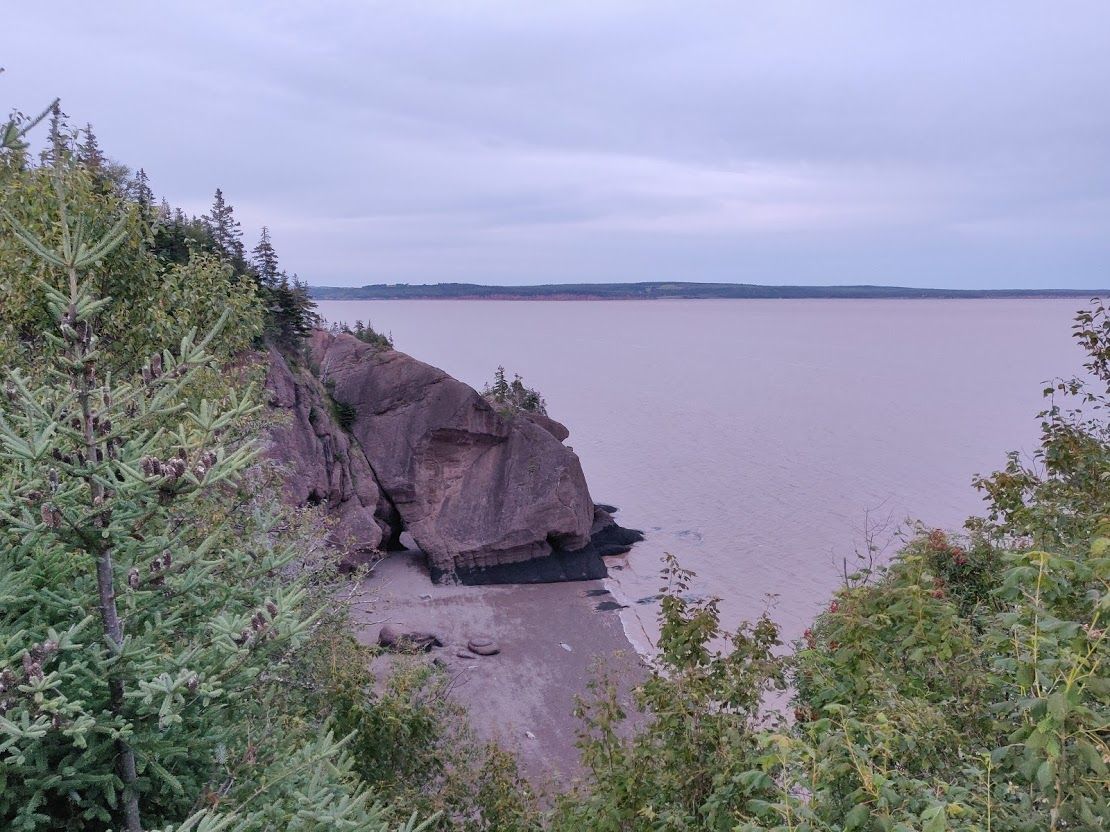
We spent twice as long as we’d planned at the historic village and left in a bit of a rush. We were trying to get to the Hopewell Rocks in the Bay of Fundy before the tide came in. Unfortunately, we were several hours late, and not only had the tide come in too far by the time we arrived but the visitors centre was long closed. We walked through the empty grounds which were obviously engineered to pack in thousands of people and had a look out over the Bay of Fundy from a viewing platform. The water here is a deep browny-red colour, due to the iron-rich silt stirred up by the rapidly advancing tide.
The final stretch of driving to Cannontown Campground in Fundy National Park took another 45 minutes, and we arrived in the dark. While navigating park roads in the pitch black is quite stressful, it’s always interesting waking up the next day because we don’t really have any idea what we’ll see when we climb out of the tent!